日期:2026年 01月 31日
標籤: Algorithm String Searching Algorithm C# Asp.NET Core
摘要:演算法-字串搜尋
m:找尋字串總長度 ; n:文本總長度 ;
時間複雜度(Time Complex):O(n + m)
空間複雜度: O(n + m)
範例檔案:Source Code
範例專案:Code Project
基本介紹:本篇分為 3 大部分。
第一部分:Z 演算法 - 介紹
第二部分:Z 演算法 - 實現
第三部分:Z 演算法 - 圖解
第一部分:Z 演算法 - 介紹
Step 1:簡介
以下截取於GeeksforGeeks(GfG)平台
In many programming problems involving strings, we often need to search for occurrences of a pattern inside a text.
A classic approach like the naive string matching algorithm checks for the pattern at every index of the text,
leading to a time complexity of O(n·m),
where n is the length of the text and m is the length of the pattern.
This is inefficient for large inputs.

To address this, several efficient string matching algorithms exist one of them is the Z-Algorithm,
which allows us to perform pattern matching in linear time. That means, it can find all matches in O(n + m) time.
簡言之,搜尋一串字串(文本),用此演算法可以在線性時間內 O(n+m) 完成
※來源:Wiki

Step 2:優缺點
優點具有以下:
| 1. 保證線性時間複雜度 O(N+M) | : | 無論文本、搜尋字串為何,永遠都為 O(N+M) |
| 2. 實作相對簡單 | : | 代碼可讀性與實作容易,將 Z演算法陣列全部匹配計算完成即可 |
| 3. 一次預處理,多次查詢 | : | 文本 + “#” + “搜尋字串” 搞定,極高效預處理 |
| 5. 空間局部性好 | : | 演算法主要是順序掃描,對 CPU Cache 友好 |
缺點:
| 1. 空間複雜度較高 O(N+M) | : | 如果文本 + 搜尋字串要 2GB 記憶體空間,那麼開銷至少要 4GB 記憶體空間才能執行 |
| 2. 無法進行串流處理 | : | 需要完整的搜尋字串、文本才能開始此演算法,KMP 就可以逐步執行 |
| 3. 對於非常短的模式,額外開銷較大 | : | 文本少時,搜尋字串越長,建立陣列開銷大 |
| 4. 不支援模式的動態修改 | : | 不同的搜尋字串、文本都需要重建陣列 |
| 5. 對於部分場景不是最優 | : | 不能模糊匹配,只能精確匹配 |
Step 3:常見的字串搜尋演算法 - 比較分析
| 特性 | Z 演算法 | KMP | Boyer-Moore | 暴力搜尋 |
| 時間複雜度 | O(N+M) | O(N+M) | O(N/M) ~ O(N*M) | O(N*M) |
| 空間複雜度 | O(N+M) | O(M) | O(M) | O(1) |
| 實作難度 | 中等 | 中等 | 較難 | 簡單 |
| 直觀性 | 高 | 中 | 低 | 高 |
| 串流處理 | 不支援 | 支援 | 支援 | 支援 |
| 多模式搜尋 | 不適合 | 不適合 | 不適合 | 不適合 |
高效能 + 可讀性高 有不可取代性,在極小專案中可以快速實現不算差的匹配搜尋,但是遠遠不適合在企業級應用中使用。
Step 4:應用場景建議
基本上除了理解匹配應用、小型專案外,不建議使用此字串演算法,有更多優秀有效的演算法應用
| 適合的場景 | 不適合的場景 |
| 1. 學術研究和教學(理解字串匹配原理) | 1. 處理巨大文件且記憶體有限 |
| 2. 需要保證最壞情況性能的場合 | 2. 需要串流處理數據 |
| 3. 一次性搜尋,不需要串流處理 | 3. 搜尋多個不同的模式 |
| 4. 記憶體充足的環境 | 4. 對空間效率要求極高 |
| 5. 需要額外利用 Z 陣列信息(如週期性分析) | 5. 企業級應用(通常用更優化的演算法) |
第二部分:Z 演算法 - 實現
Step 1:完整代碼
完整代碼可以從Source Code下載,此代碼對應於 LeetCode 的 796 題,Prime Number of Set Bits in Binary Representation
主要以下 6 個步驟完成,完整代碼如下:
| 步驟 | 說明 |
| 1~3 | 預處理,z 演算法需要的準備工作,分隔符號必須是 text , pattern 不存在的字符 |
| 4~6 | 將 zBox 陣列的每個匹配完成,最終 zBox 可以計算出與 pattern 比對相同字元數量 |
| 匹配函式 | 字元與字元的比對 |
private bool ZAlgorithmSearch(string text, string pattern)
{
    // 1. 將模式、分隔符、文本組合成一個字串 (分隔符這邊用 # 要避免與匹配字串影響)
    var searchStr = $"{pattern}#{text}";

    var searchLength = searchStr.Length;// 組合字串的總長度
    var modelLength = pattern.Length;   // 模式字串的長度(用於後續判斷是否完整匹配)

    // 2. 初始化 Z 陣列
    // 補充 : zBox[index]表示:從位置 index 開始的子字串與整個字串 s 的最長公共前綴長度
    // 例如 : s="ababab", zBox[2]=4 表示從位置2開始的 "abab" 與開頭的 "abab" 有 4 個字元匹配
    int[] zBox = new int[searchLength];

    // 3. 初始化 zBox 陣列
    // 目的: Z 字串演算法要將所有陣列的匹配長度找出
    int zBoxLeft = 0, zBoxRight = 0;

    // 4. 計算 zBox 陣列 從位置 1 開始(位置 0 可跳過,自己跟自己)
    for (int index = 1; index < searchLength; index++)
    {
        // 5-1. Index 在 zBox 之外 (index > zBoxRight)
        if (index > zBoxRight)
        {
            // 5-1-1. 當前位置在已知匹配區間之外,需要重新暴力比對
            zBoxLeft = zBoxRight = index;  // 將新的匹配區間起點設為 i

            // 5-1-2. 進行逐一匹配
            MatchAndSetArray(ref zBox, ref index, ref zBoxLeft, ref zBoxRight);

        }
        // 5-2. Index 在 Z-box 之內
        else
        {
            // 5-2-1. 當前位置在已知匹配區間內,可以利用之前計算出的 zBox 信息
            int offsetIndex = index - zBoxLeft;

            // 5-2-2. 可重用 : zBox 紀錄 (會進入此表示前一次有找到至少1個匹配)
            if (zBox[offsetIndex] < zBoxRight - index + 1)
            {
                zBox[index] = zBox[offsetIndex];
            }
            else// 5-2-3. 不可重用的狀況
            {
                // 補充: LeetCode 不會進入此,但是 Z 演算法的完整實作必須包含它
                // 進入此的條件有以下:
                // - 1. 當 pattern 長度小於 text 時
                // - 2. 且存在重複或週期性結構
                // 例如: pattern = "aaa", text = "aaaa"
                zBoxLeft = index;

                // 5-2-4. 進入匹配
                MatchAndSetArray(ref zBox,ref index, ref zBoxLeft, ref zBoxRight);
            }
        }
    }

    // 6-1. 檢查是否完全匹配 - 有目標數量表示有完全匹配
    for (int index = modelLength + 1; index < searchLength; index++)
    {
        if (zBox[index] == modelLength)
        {
            return true;
        }
    }
    return false;//6-2. 沒找到

    // 找出匹配量,並更新 zBox 陣列
    void MatchAndSetArray(ref int[] array, ref int zBoxIndex,
        ref int zBoxLeft, ref int zBoxRight)
    {
        // 1. 匹配
        while (zBoxRight < searchLength &&
               searchStr[zBoxRight - zBoxLeft] == searchStr[zBoxRight])
        {
            zBoxRight++;
        }

        // 2. 記錄匹配長度
        array[zBoxIndex] = zBoxRight - zBoxLeft;

        // 3. 因為 while 迴圈會讓 zBoxRight 多加 1,因此要減 1 校正
        zBoxRight--;
    }
}
Step 2:LeetCode 上的執行方式
public bool RotateString(string s, string goal)
{
    if (s.Length != goal.Length)
    {
        return false;
    }
    return ZAlgorithmSearch(s+s, goal);
}
Step 3:LeetCode - 成功執行結果
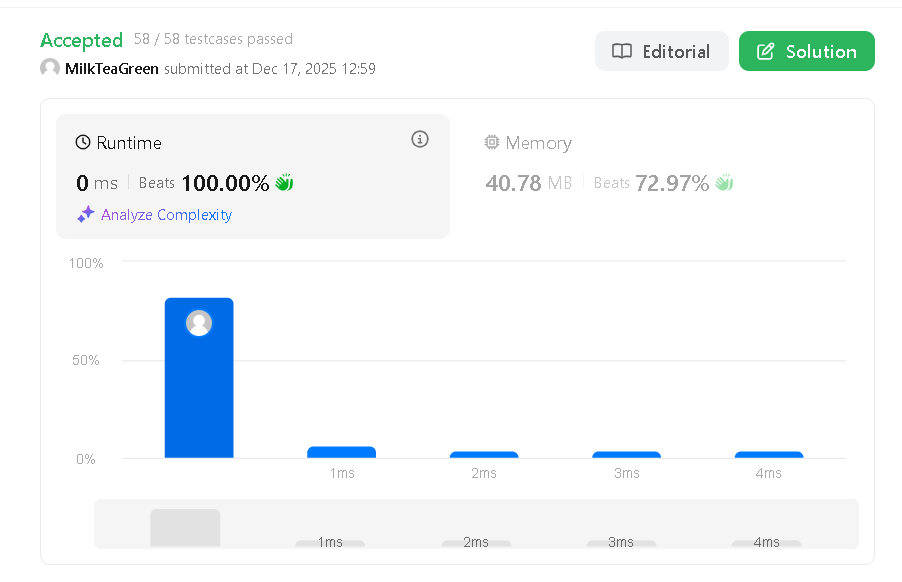
附上此代碼確實可在 LeetCode 上執行 C# 版本
※此LeetCode 題目相當簡單,使用 z 演算法會徒增記憶耗費,此範例展示此演算法是可以實際應用
| Runtime 範圍 | 0 ms |
| Runtime Best Beat | 100.00% |
| Memory 範圍 | 40.76 ~ 40.78 MB |
| Memory Best Beat | 72.97% |
Step 4:補充 LeetCode 標準解法
實際上面對題目時應妥善利用 C# 內建的函式庫,用聰明的方式處理問題。
public bool RotateString(string s, string goal)
{
    if (s.Length != goal.Length)
    {
        return false;
    }
    return return (s+s).Contains(goal);
}
第三部分:Z 演算法 - 圖解
Step 1:準備階段 - 資料預處理
以 LeetCode 的範例做說明
| 文本 | : | abcde |
| 搜尋字串 | : | cdeab |
Step 2:預處理階段
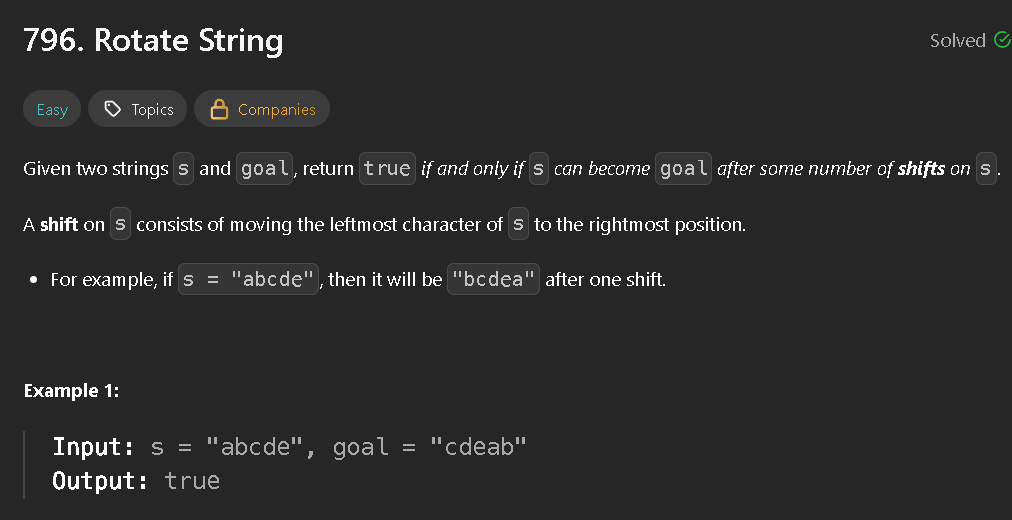
以下為預處理資料
| 文本 | : | abcde |
| 搜尋字串 | : | cdeab |
| zBox(Array) | : | int[16] 依照 zBox 比對字串長度 |
| zBox比對字串 | : | cdeab#abcdeabcde |
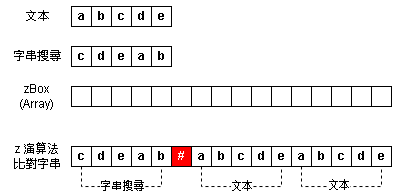
Step 3:zBox Index = 1
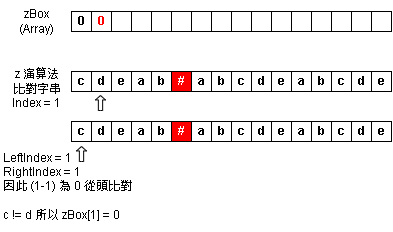
Step 4:zBox Index = 2
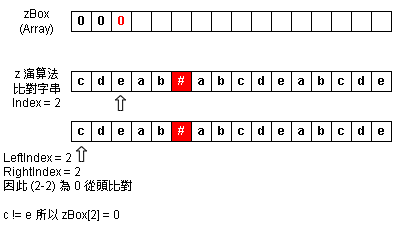
Step 5:zBox Index = 3~8
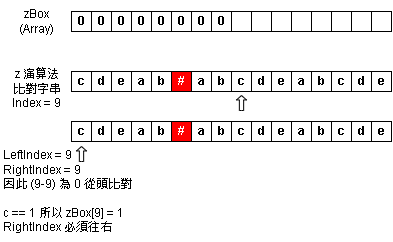
Step 6:zBox Index = 9 - 匹配到相同
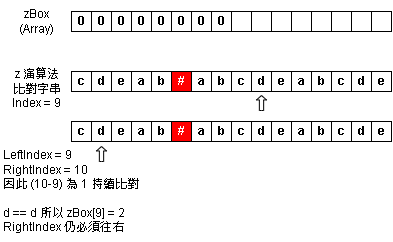
Step 7:zBox Index = 9 - 持續匹配
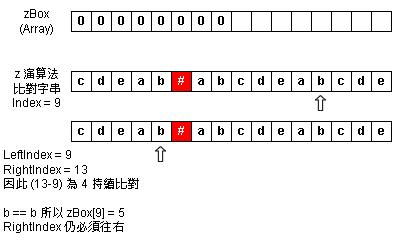
Step 8:zBox Index = 9 - 匹配結束紀錄
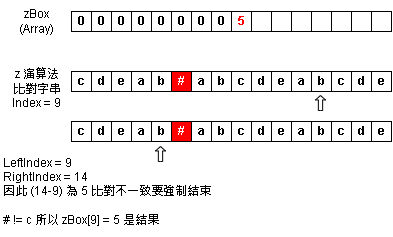
Step 9:zBox Index = 10 - 小於 RightIndex 狀況
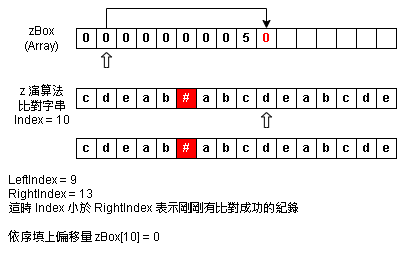
Step 10:zBox Index = 10~13 - 補完偏移量
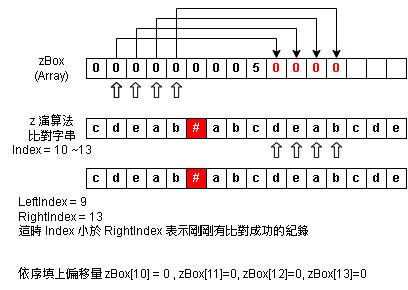
Step 11:zBox Index = 14 - 匹配到相同
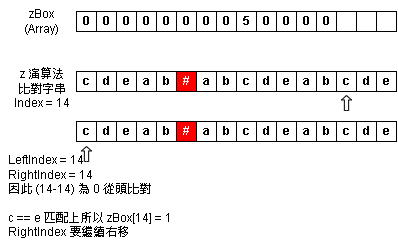
Step 12:zBox Index = 14 - 匹配結束紀錄
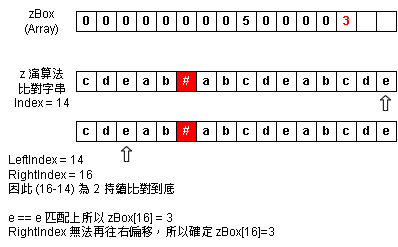
Step 13:zBox Index = 15,16 - 補完偏移量
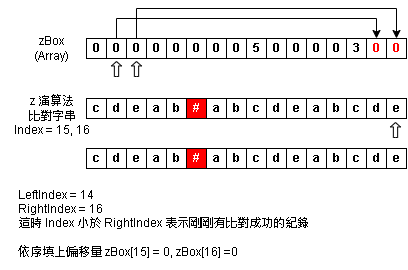
Step 14:完成 zBox Array
最終我們可以得到 zBox[8] = 5 與搜尋字串長度(5) 相同,對應 LeetCode 的返回為 True
| 文本 | : | abcde |
| 搜尋字串 | : | cdeab |
| zBox(Array) | : | int[16] {0,0,0,0,0,0,0,0,5,0,0,0,0,3,0,0} |